
Quick answer
Foundation clings to dry patches when the skin is asking for comfort before coverage. The fix is usually not more foundation. It is a lighter moisturizer layer, enough settle time before makeup, and a formula or application style that does not keep scraping over flaky spots.
- Use a fragrance-free moisturizer that supports the barrier instead of depending on primer alone.
- Let sunscreen and skincare settle before foundation goes on top.
- Press foundation into the driest zones with a damp sponge or fingertips instead of brushing back and forth.
- Keep extra powder away from flaky cheeks, around the mouth, and anywhere the base is already catching.
When foundation starts gripping the same little areas every morning, people often assume the product is wrong. Sometimes it is. But just as often, the real problem is that the skin is slightly rough, dehydrated, or irritated before makeup even begins. That is why a formula that looked fine last month can suddenly look dusty, broken, or older than it should.
Why dry patches show up through foundation so fast
Dry patches are basically uneven texture with weaker moisture balance. Once pigment lands on top, the roughness becomes easier to see. Cleveland Clinic's dry-skin guidance points out that over-exfoliating and harsh products can damage the skin barrier, which leaves skin flaky and tight. In practical makeup terms, that means foundation stops gliding and starts collecting.
The fastest improvement usually comes from treating base makeup like the last step of skin prep, not the first step of correction. If the surface feels tight after cleansing, foundation will usually tell on it.
This is where a support step like how to pick a ceramide moisturizer for dry skin becomes more useful than switching compacts again. If the face is already a little compromised, a barrier-friendly moisturizer often changes the finish more than another primer does.
What to fix before you blame the foundation
The American Academy of Dermatology recommends gentle, fragrance-free care for dry skin, and Cleveland Clinic notes that a good facial moisturizer should usually be lighter than a heavy body cream unless your skin is very dry. That matters because dry-patch makeup can get worse in two opposite ways: too little moisture leaves the surface scratchy, but too much rich product right before foundation can make the base slide and then separate.
The useful middle ground looks like this:
| Step | What helps | What usually backfires |
|---|---|---|
| Moisturizer | Thin, even layer on slightly damp skin | Thick cream still sitting wet under foundation |
| Sunscreen | Let it settle for a few minutes | Rushing straight into base while everything is slippery |
| Foundation choice | Natural or radiant finish when skin feels rough | Extra-matte or heavy longwear formula on flaky areas |
| Tool | Damp sponge, fingertips, or a soft dense brush used with light pressure | Scrubbing a dry patch over and over for more coverage |
If you already know that rough texture shows up most around the cheeks or mouth, keep the center of the face more perfected and let the dry zones stay lighter. Coverage does not need to be democratic. The face usually looks fresher when the driest part gets the thinnest layer.
Formula matters more than brand loyalty on rough-skin days
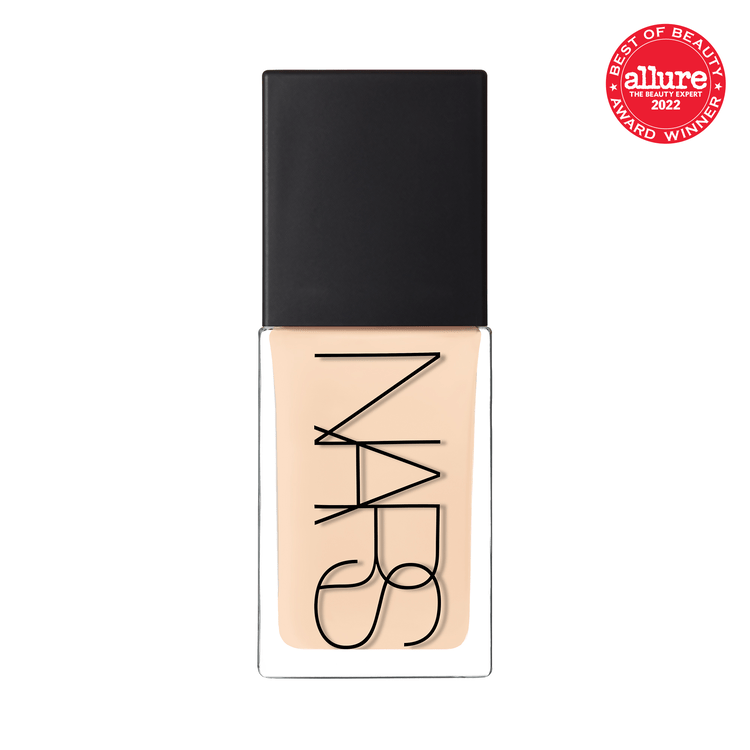
This is where product category matters. NARS describes Light Reflecting Foundation as an advanced makeup-skincare hybrid with a natural, radiant finish, and the brand specifically tells readers to prepare skin for smooth makeup application and start from the center of the face. MAKE UP FOR EVER frames HD Skin Hydra Glow around hydration and backstage prep, even noting that its artists like a hydrating sheet mask before makeup. Those details do not prove one bottle is perfect for everyone, but they do explain why hydrating, flexible formulas tend to read better when the skin is not perfectly smooth.
If your usual matte base keeps turning papery, it may help to compare the finish logic in What Laneige Neo Foundation Matte Suggests About a Soft-Matte Base and Why eSpoir Be Velvet Cushion Works on Rough Skin. The point is not that glow is always better. The point is that rough-skin days need formulas that bend a little instead of freezing every patch into place.
How to apply foundation when one area keeps catching
Start with less than you think. Put the first layer only where you want the most evening out, usually around the nose, inner cheeks, or center of the forehead. Then bring the leftover product outward. On the driest spots, press instead of sweep. A dragging motion keeps lifting flakes and tracing them with pigment.
If one small patch is already visible, do not keep stacking more base on top of it. Press a tiny amount of moisturizer onto that area with a fingertip, wait a moment, and then tap the edge back together. Cleveland Clinic's face-dryness advice also notes that petroleum-jelly-based spot support can help very dry areas, but that works best as overnight repair rather than as a thick daytime layer under makeup.
Two other habits help:
- stop over-powdering the zones that already look fragile
- pause exfoliating acids or retinoids for a night or two if the texture got suddenly worse
If active skincare is part of the reason the surface changed, it is smarter to calm the routine first than to keep troubleshooting foundation in isolation.
The clean takeaway
✨ Foundation stops clinging to dry patches when the skin is calmer, the base is thinner, and the formula has a little flexibility. Prep lightly, let layers settle, and use the least product on the roughest areas. If the same spots keep catching every day, read that as a skin-condition clue, not just a makeup failure.
Sources
- American Academy of Dermatology: How to pick the right moisturizer for your skin
- Cleveland Clinic: The Best Moisturizer for Your Dry Skin? Here's What To Look For and How To Use It
- Cleveland Clinic: Tips for Getting Rid of Dry Skin on Your Face
- NARS Light Reflecting Advanced Skincare Foundation official page
- MAKE UP FOR EVER HD Skin Hydra Glow official page
Read next
- Does Sunscreen Spray Work Over Body Lotion?
Sunscreen spray can work over body lotion if the lotion has fully absorbed first, the spray goes on generously, and you rub it in instead of misting lightly.
- How to Reapply Sunscreen Over Makeup Without Pilling
Reapply sunscreen over makeup without pilling by blotting first, choosing powder, mist, or clear stick by base texture, and pressing instead of rubbing.
- How to Reapply Body Sunscreen Spray Without Missing Spots
Body sunscreen spray works best when you reapply by zones, rub it in, and check shoulders, arms, legs, ankles, and swimsuit edges.
 Glowfits