Quick answer
This page solves the makeup method after the timing decision is already clear. If you first need the plain swim, sweat, towel, and two-hour rule, start with When to Reapply Sunscreen After Swimming or Sweating: Every 2 Hours, 40 or 80 Minutes, or Right After Towel Drying?.
- Treat this as a thin top-up over a real morning sunscreen layer, not a second full makeup step.
- Use powder for the most set, matte, or already-powdered finish.
- Use a stick when you only need focused coverage on the nose, cheekbones, or forehead edge.
AAD guidance is still the baseline: sunscreen needs enough product and regular reapplication to keep protecting exposed skin. FDA guidance also keeps the rule simple: reapply at least every two hours, and more often after swimming or sweating. Makeup makes the method more delicate, but it does not remove the need to reapply.
🧭 Pick the over-makeup sunscreen path that matches your day
Readers often land here with different sunscreen problems mixed together. This page is the midday top-up question: the morning sunscreen layer is already on, the makeup is already sitting there, and now you need a practical reapplication move that will not roll everything up.
| If you mean… | Start with… | Why |
|---|---|---|
| “My base is set and I need the cleanest midday touch-up method.” | This page | This is the right doorway when powder, mist, and stick all sound possible and you need the least messy format. |
| “Will my morning cushion layer weaken the sunscreen underneath?” | Does Cushion Makeup Weaken Your Sunscreen? | That page answers the sunscreen-first, cushion-second question before reapplication even starts. |
| “I only need a smaller-zone touch-up on exposed spots.” | How to Use an SPF Stick Over Light Makeup | A stick is more realistic when the nose, cheekbones, or forehead edge need attention without reworking the whole face. |
| “My base already has SPF, so do I still need anything else?” | Is SPF in Foundation Enough? | That page separates makeup SPF support from a real sunscreen layer so the reapplication answer stays grounded. |
Keeping those questions separate makes this page more useful. The answer is rarely “more product everywhere.” It is usually less friction, better format choice, and a calmer top-up plan.
Why sunscreen pills over makeup
Pilling usually comes from friction plus too many layers that do not want to sit together. A water-gel sunscreen, silicone primer, gripping foundation, setting powder, cream blush, and a second wet sunscreen layer can all be fine separately. When you rub them together after lunch, they can roll into tiny flakes because the top layer is moving the base underneath.
That is why the first step is not more sunscreen. It is removing the things that make sunscreen slide. Press a tissue or blotting paper over the T-zone, beside the nose, and along the cheeks. Do not wipe. If the skin feels damp from sweat, wait until it is dry. Sunscreen over a damp, oily, or powder-heavy surface is much more likely to ball up.
Match the SPF format to the makeup finish
There is no single perfect format for every face. The best choice depends on what is already on your skin.
| Makeup finish | Better reapplication format | Why it helps |
|---|---|---|
| Set powder, matte foundation, oily T-zone | Powder SPF brush | Adds less wet friction and can reduce shine |
| Skin tint, cream blush, flexible base | Fine SPF mist | Settles without dragging pigment around |
| Bare edges, nose bridge, cheekbones, hairline | Clear SPF stick | Targets high-exposure areas quickly |
| Full-coverage foundation that already looks dry | Mist first, then light powder SPF only where needed | Too much rubbing can make dry patches lift |
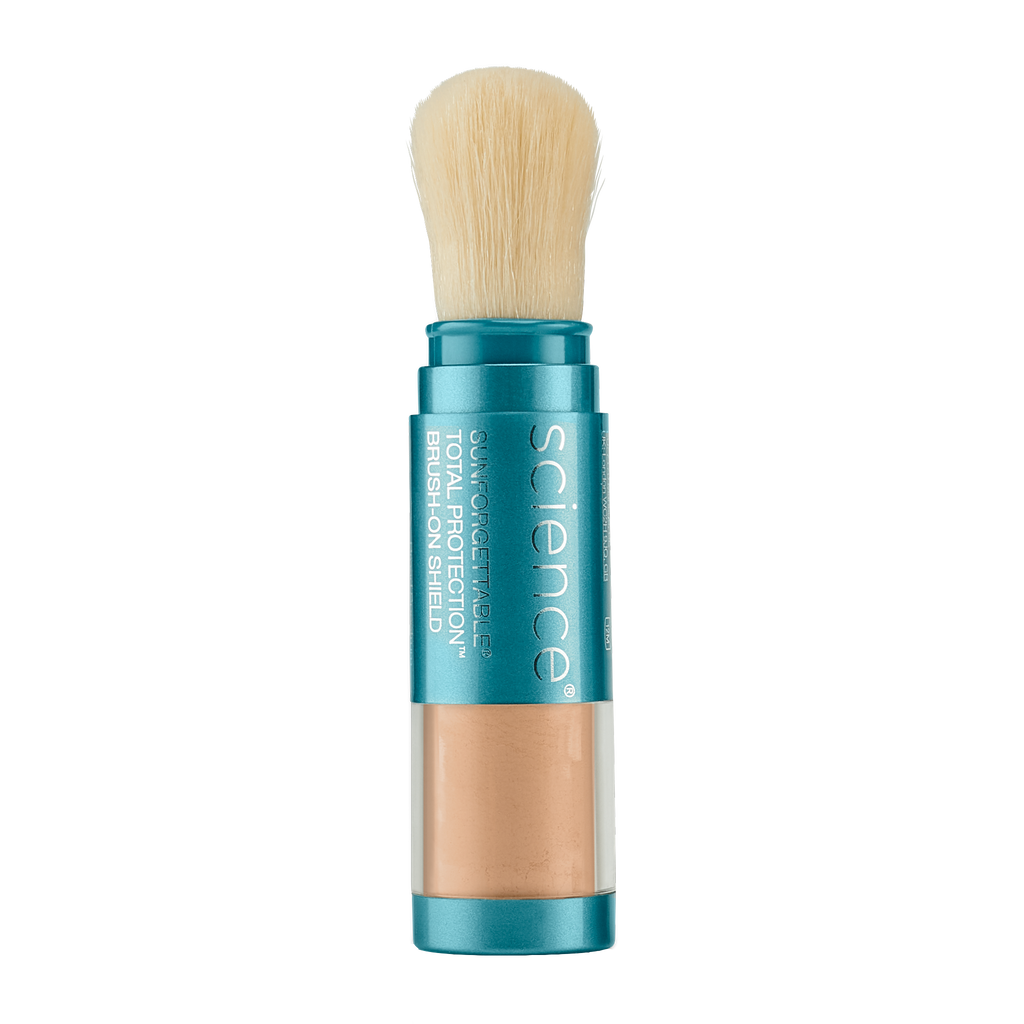
Colorescience positions its Brush-On Shield SPF 50 as a powder sunscreen that can be worn alone or over makeup. The brand's instructions for the Glow version are especially useful for technique: circular motions, multiple passes, and enough time on the face rather than one tiny swipe. Shiseido's Clear Sunscreen Stick is positioned as a broad-spectrum stick that can be reapplied over or under makeup. Vacation's Super Spritz is a face mist designed to work over makeup and fit in a bag. Those formats solve different makeup problems, so pick by finish instead of copying one universal routine.
The no-pilling routine
- Blot, then wait ten seconds. Oil and sweat make every format less even. Press, lift, and let the surface calm down.
- Start on the least risky area. Try the side of the face or jaw before the nose, where makeup usually breaks first.
- Use a press-and-release motion. For sticks, warm the product on the back of your hand, touch it to the skin, then press with clean fingers or a sponge. Long swipes are what lift blush and concealer.
- Mist in thin layers. Hold the bottle away from the face, close eyes and mouth, mist lightly, let it settle, then press only if droplets sit on the surface.
- Powder longer than you think. A powder SPF brush should make multiple passes. One decorative sweep is better than nothing, but it is not the same as an even reapplication.
- Do not chase a perfect finish. If you keep adding product to fix every tiny patch, the layers get heavier and pilling gets worse.
If you already use a sunscreen stick, read How to Use an SPF Stick Over Light Makeup next. If your issue is whether makeup SPF counts enough, Is SPF in Foundation Enough? is the better support page. For powder-specific touch-ups, How Powder Sunscreen Works Over Makeup stays in the same lane.
What to avoid
Do not rub a lotion sunscreen directly over a fully set base unless you are willing to sacrifice the makeup. It can work on bare skin or very sheer tint, but it is the highest-risk method for pilling. Do not rely on SPF foundation alone for a long outdoor day, either. Makeup products are usually applied for finish, not in the generous amount used for sunscreen testing.
Also be careful with very matte powder before reapplication. A heavy powder layer can grab a wet mist and turn patchy. If you know you will be outside later, keep the morning base flexible: sunscreen, light tint, cream color, and a little powder only where you need it. Your afternoon SPF will sit better.
The clean takeaway
The smoothest SPF top-up over makeup is boring in the best way: blot, choose the least disruptive format, and press instead of rubbing. Powder suits set makeup, mist suits flexible makeup, and clear sticks suit small exposed zones. Keep the first sunscreen layer generous, then use reapplication to restore protection without rebuilding the whole face.

Sources
- American Academy of Dermatology, How to apply sunscreen
- FDA, Tips to Stay Safe in the Sun: From Sunscreen to Sunglasses
- Colorescience Sunforgettable Total Protection Brush-On Shield SPF 50
- Shiseido Clear Sunscreen Stick SPF 50+
- Vacation Super Spritz SPF 50 Face Mist
Read next
- Can You Apply Sunscreen Over Niacinamide Serum?
Yes, apply sunscreen over niacinamide serum in the morning: let the serum settle, add moisturizer only if needed, and keep sunscreen as the final skincare layer.
- How Much Sunscreen Do You Need for Face and Neck?
Use a full two-finger amount as your practical floor, then make sure the sunscreen still reaches the front and sides of your neck, ears, and jawline instead of stopping at the cheeks.
- How to Use Sunscreen Powder Over Makeup Without Caking
Use sunscreen powder over makeup by blotting first, buffing it onto dry skin in slow passes, and treating it as a midday touch-up layer instead of your only sunscreen.