Quick answer
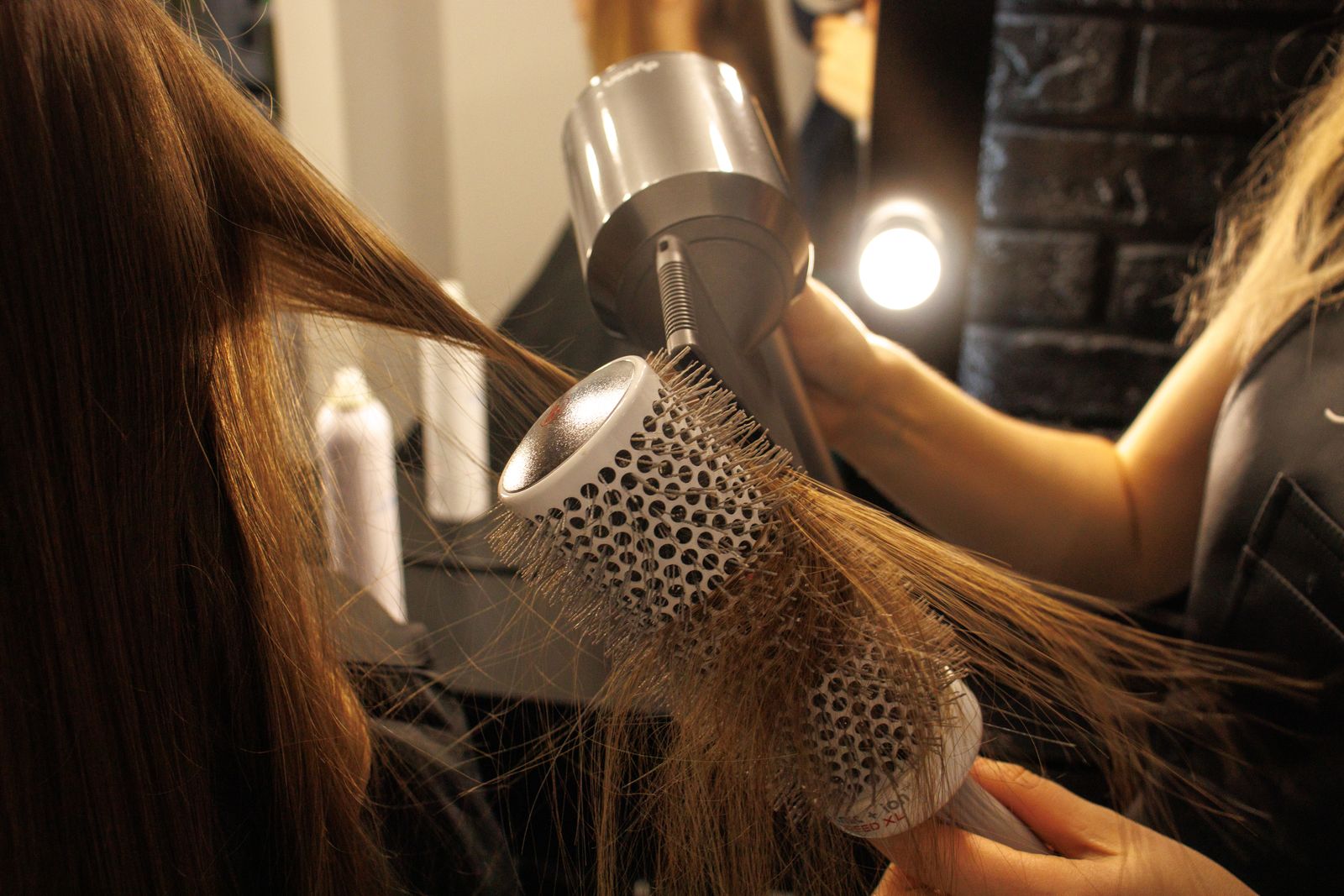
When a round brush sticks as soon as you try to roll it, start with a simpler pass: detangle partly dry hair, take a manageable section, and move the brush and dryer together down the hair. Add a full wrap for waves only after you can guide that pass comfortably.
These steps are for a plain round brush used with a separate dryer. Heated brushes, rotating hot-air brushes and powered attachments have their own operating and release instructions; follow the directions for your tool.

Detangle before styling
Work out existing knots before bringing in the round brush. Denman recommends detangling from the ends toward the roots and distinguishes detangling tools from styling tools. Its D3 Classic Styler, for example, is intended for styling and curl definition rather than initial detangling.
Choose a detangling method suited to your texture. The American Academy of Dermatology (AAD) advises letting straight hair dry a little before gently using a wide-tooth comb; textured hair and tight curls should be combed while damp. Avoid tugging. If hair catches before you start blow-drying, resolve the knot first.
Start partly dry
L’Oreal Paris’s tutorial begins with partially air-dried hair, then uses heat protectant, a dryer nozzle and small sections. Apply your own heat-protection product according to its label; the tutorial’s routine does not make one product or application method right for every formula.
For its U.S. size 3 ceramic vented round brush, ghd recommends starting with hair 80% dry. That figure is guidance for this specific brush. For a home blow-dry, the practical goal is to begin shaping after some of the water is gone, rather than trying to style soaking-wet hair.
Set up a section you can control
Separate one section and keep the rest of your hair out of its path. Smaller sections are easier to guide and repeat. If the hair slips off the brush, try handling less hair before adding more rotation; the right amount depends on your hair length, brush and control.
Before switching on the dryer, decide where your hands will travel and how the section will release. You can rehearse the movement with the dryer off. If you can’t guide the brush smoothly, simplify the pass before continuing.
Guide the brush and dryer together
L’Oreal’s tutorial places the brush under the section and directs the dryer toward the top side. As the brush moves up and away from the head, the dryer travels farther down the hair. Keep both moving along the section instead of winding the lengths around a stationary barrel.
ghd also advises keeping tension while moving its size 3 brush through small sections. Use controlled contact, not a hard pull: the AAD advises avoiding tugging. If the pass starts to pull, stop and reassess the section.
Use the dryer’s lowest heat setting and follow its instructions for the nozzle and safe operation. Keep the dryer away from water, and don’t direct hot air into your face or scalp. The AAD recommends air-drying when possible and using heat tools less often, so a blowout needn’t be part of every wash.
Add a wrap only for a wave
A smooth pass and a wrapped wave are different techniques. For its size 3 ceramic brush, ghd’s instructions describe drying a section, wrapping it around the brush, applying dryer heat to the barrel, and letting it cool for 30 seconds. The brand then advises using the dryer’s cool shot before gently unwinding.
Follow the instructions for the brush you own; ghd’s timing and sequence apply to that model. If you’re still working on a controlled pass, leave the wrap for another time.
If hair gets trapped, stop the dryer and don’t twist or pull harder. Seek hands-on help from a stylist if the brush remains stuck. For your next attempt, return to a smaller, detangled section and a simpler pass.
Read next
Sources
- L'Oreal Paris U.S.: round-brush blow-dry tutorial
- ghd U.S.: size 3 ceramic vented round brush instructions
- Denman U.K.: detangling guide and styling-tool distinction
- AAD: how to stop damaging your hair
Image credits
- Featured image: Daniil Kondrashin / pexels.com (original image page)
- Body image 1: Daniil Kondrashin / pexels.com (original image page)