Quick answer
Reusable makeup pads can trap mascara and foundation between uses, but the right wash depends on the pad. Check its care label, remove residue as directed, and follow that maker’s washing and drying instructions. Garnier, Face Halo, and MakeUp Eraser have different rules for laundry, softener, and drying, so don’t combine them into one routine.
Start with your pad’s care instructions
Reusable makeup removers come in different sizes and fabric constructions. Keep the packaging or save the maker’s care page so you can check the instructions for your specific item. A reusable cloth’s care routine may not apply to a foam makeup sponge, a disposable cotton round, or another brand’s pad.

Check which wash methods are allowed, the temperature limit, whether to use a laundry bag, and how to dry the pad. If the product label differs from the website, ask the manufacturer about your exact version. Advice for someone else’s pad may not suit yours.
Garnier: hand wash after use
The Garnier U.S. Micellar Cleansing Eco Pads instructions say to wash the pads before first use, then hand wash them with soap and water after each use. Garnier also recommends a weekly machine wash for a deeper clean. It says not to use fabric softener and to lay the pads flat to dry.
Garnier’s cleaning FAQ adds that the pads can go in a laundry bag at up to 40°C/104°F. It calls for complete air drying and says to avoid bleach. These directions apply to Garnier’s pads; the temperature is not a general rule for reusable makeup removers or a claim about sterilization.
Face Halo: wash soon after use
Face Halo’s official care FAQ recommends washing the pad by hand with warm water and soap immediately after use. The brand says that waiting can make heavy-makeup stains take more effort to remove. It suggests a laundry bag for machine washing, recommends air drying to help preserve the pad’s shape, and advises checking the product label for temperature guidance.
Face Halo also recommends washing with light or white items in response to a question about dye transfer from jeans. The company says discoloration from another garment does not affect its pad’s makeup-removal capacity. That is a claim about the product’s performance, not proof that a stained textile is hygienically clean.
Softener and dryer rules vary
Garnier and Face Halo both advise against fabric softener. Face Halo explains that softener can coat the strands and reduce their effectiveness. By contrast, the Original MakeUp Eraser care FAQ says its cloths are safe to wash with fabric softener and dryer sheets.
MakeUp Eraser recommends machine washing hot, using the included laundry bag, and washing the cloth before first use. It also says the cloth can go in an existing load of laundry. Its FAQ does not specify a numerical temperature, so don’t carry over Garnier’s limit.
The drying instructions differ, too: Garnier says to lay its pads flat to air dry, and Face Halo recommends air drying. MakeUp Eraser says its cloths can go in the dryer. Follow the directions for the product you own.
Keep a simple clean-and-used rotation
Set aside enough pads to cover the time between washes required by their care instructions. Keeping a laundry bag near the washing area can help prevent small pads from getting lost in a load. It’s a useful organizing step, but it doesn’t replace any after-use cleaning the maker recommends.
Choose a drying spot before washing, and put pads away once they’re dry. If makeup remains after following the permitted cleaning method, ask the manufacturer about stain treatment for that product instead of improvising with bleach, boiling, or a hotter wash. The care instructions here do not establish a universal disinfection method or a fixed replacement schedule.
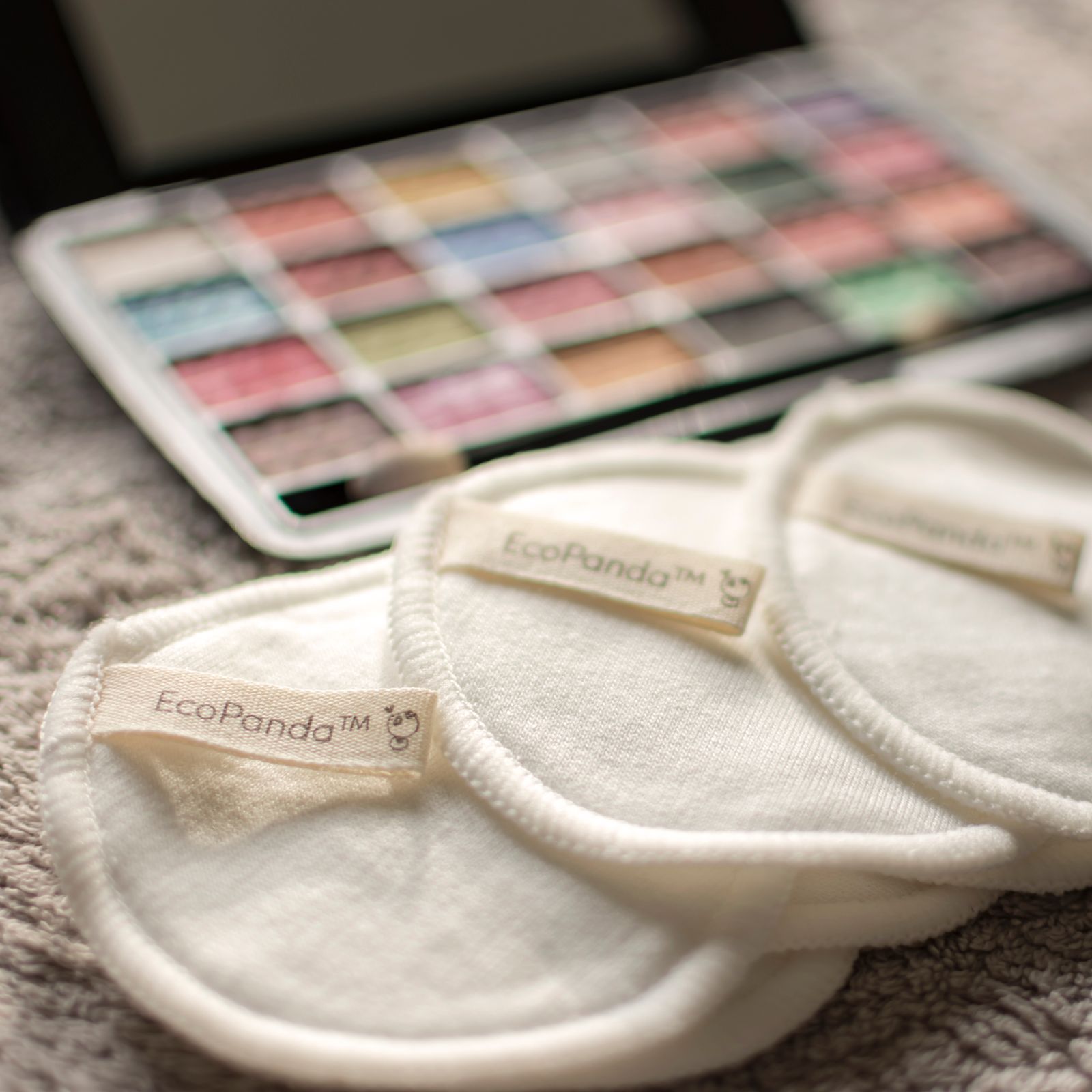
The photos show EcoPanda reusable rounds and storage accessories, not the Garnier, Face Halo, or MakeUp Eraser products discussed above. They illustrate the type of tool; they do not demonstrate any named product’s washing method or show a cleaning result.
Read next
Sources
- Garnier U.S.: Micellar Cleansing Eco Pads instructions
- Face Halo: official care FAQ
- Original MakeUp Eraser: official care FAQ
Image credits
- Featured image: EcoPanda / pexels.com (original image page)
- Body image 1: EcoPanda / pexels.com (original image page)