
Quick answer
Amount and timing work together. Once that face-and-neck layer meets water, heavy sweat, or towel drying, jump to Do You Need to Reapply Sunscreen After Swimming or Sweating? for the 40-minute, 80-minute, towel-drying, and two-hour reset points in one place.
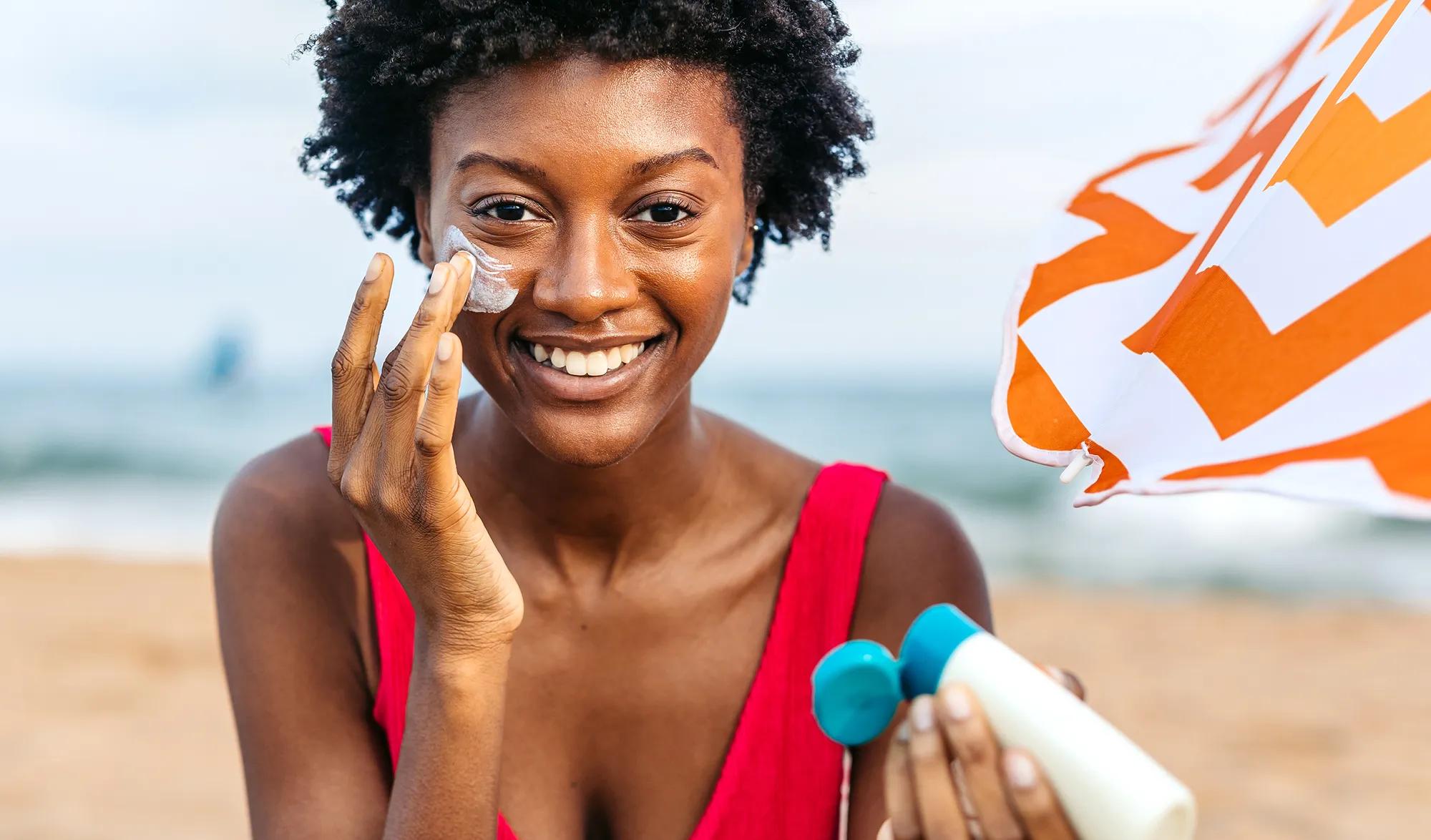
- AAD says to use at least 1 teaspoon for the face, which it describes as the amount that covers the length of your index and middle fingers.
- The same AAD guide also tells you not to skip the neck, ears, and other exposed skin.
- Reapply every two hours outdoors, and sooner after swimming or sweating.
- If the layer looks invisible after one quick pass, you probably used too little.
The short version is simple: face-and-neck sunscreen should feel generous, not cosmetic.

Why people still underapply
The SPF number on the bottle is tested under a thick, even application. StatPearls describes that testing amount as 2 mg per square centimeter, which is much more than most people use in daily life. That gap is why sunscreen often feels like it "doesn't work" when the real problem is that the layer was never full enough to begin with.
AAD makes the same point in more practical language. Its consumer guide says most adults need about 1 ounce for the body and at least 1 teaspoon for the face. That is already more than many people expect from a daily face routine, especially if they worry about pilling under the rest of their products.
What the amount looks like in real life
If you want a fast mirror rule, start with sunscreen drawn along your index and middle fingers. CeraVe's Hydrating Sheer Sunscreen directions use almost the same visual: one line of product on two separate fingers for the face. That finger method is useful because it stops the usual mistake of turning sunscreen into a tiny skincare step.
Where this becomes an inference from the sources is the neck. AAD's minimum is for the face, not the face-plus-neck combined, and the same page separately reminds readers to cover the neck and ears. So if you stretch one small face-only amount over the cheeks, jawline, front neck, and sides of the neck, coverage usually gets thinner exactly where people forget to check.
A practical rule is to start with a full two-finger amount, spread it over the face first, then confirm there is still enough left for the neck instead of hoping the leftovers will somehow do the job.
The spots that get missed first
| Area | What usually happens | Better check |
|---|---|---|
| Front of neck | Product stops under the chin | Pull sunscreen down after the cheeks are fully covered |
| Sides of neck | Only the center gets coated | Sweep back toward the ears and hairline |
| Ears | They get forgotten until they burn | Tap leftover product over the tops and edges |
| Jawline | Product blending often stops the SPF there | Join the face and neck layers so there is no bare strip |
Cleveland Clinic's current mineral-sunscreen guide says to aim for a nickel-sized amount for the face and neck and to cover exposed spots like the ears, hairline, and neck. Different guides use slightly different measuring shortcuts, but they all point in the same direction: most people are not using too much. They are using too little.
How to apply it without fighting the rest of your routine
If sunscreen feels impossible at the right amount, the formula may be the problem more than the quantity. Coppertone positions its Hydrating UV Defense Face Sunscreen as a lightweight face product that layers invisibly, while CeraVe describes its hybrid formula as quick-spreading and non-greasy. Those are brand claims, not universal rules, but they point to the practical fix: if a generous layer always pills, switch to a face sunscreen that is easier to spread instead of shrinking the amount.
Try this order:
- Apply sunscreen after skincare and before the rest of your routine.
- Spread it over the face first, then carry the layer down over the neck.
- Check the ears, jawline, and hairline before you stop.
- Give it a short settle time before anything else goes on top.
That order matters because a rushed half-layer under everything else is still a half-layer.
When you probably need a little more
You may need more than your usual face amount when:
- the front and sides of the neck are fully bare,
- your ears are uncovered,
- you are using a very fluid sunscreen that spreads thinly,
- or you tend to stop once the cheeks look shiny enough.
FDA guidance adds the other half of the answer: broad-spectrum sunscreen with SPF 15 or higher helps with skin-cancer and early-aging protection only when it is used as directed. In other words, the label assumes real coverage, not a decorative swipe.
The takeaway
For face and neck, do not think in terms of the smallest amount you can get away with. Think in terms of full coverage. A two-finger amount is a solid starting floor, and if the neck, ears, and jawline are exposed, check whether you need a bit more rather than stretching one thin layer too far. The easiest sunscreen habit to fix is usually not the SPF number. It is the amount in your hand.
Read next
- What Does Broad Spectrum Mean on Sunscreen? – Open this if the next question is how to read the label once the amount is sorted out.
- When to Reapply Sunscreen After Swimming or Sweating – Read this next when your first layer is on and the real decision is timing.
- Does SPF 50 Last Much Longer Than SPF 30? – Use this when you are comparing numbers and want to know what changes in practice.
Sources
- American Academy of Dermatology: How to apply sunscreen
- Cleveland Clinic: Mineral Sunscreen: What It Is and How To Use It
- NCBI Bookshelf: Sunscreens and Photoprotection
- FDA: Tips to Stay Safe in the Sun: From Sunscreen to Sunglasses
- CeraVe: Hydrating Sheer Sunscreen Broad Spectrum SPF 30 for Face & Body
- Coppertone: Hydrating UV Defense Face Sunscreen Lotion SPF 60+
Read next
- How to Use Sunscreen Powder Over Makeup Without Caking
Use sunscreen powder over makeup by blotting first, buffing it onto dry skin in slow passes, and treating it as a midday touch-up layer instead of your only sunscreen.
- What Does Broad Spectrum Mean on Sunscreen?
Broad spectrum on a sunscreen label means the formula is meant to protect against both UVA and UVB rays, but you still need to check the SPF number, how much you apply, and whether you reapply it.
- Does Sunscreen Spray Work Over Body Lotion?
Sunscreen spray works over body lotion when the lotion has already gone dry-touch, the spray is applied by body zone, and you rub the layer in instead of misting lightly.