
Quick answer
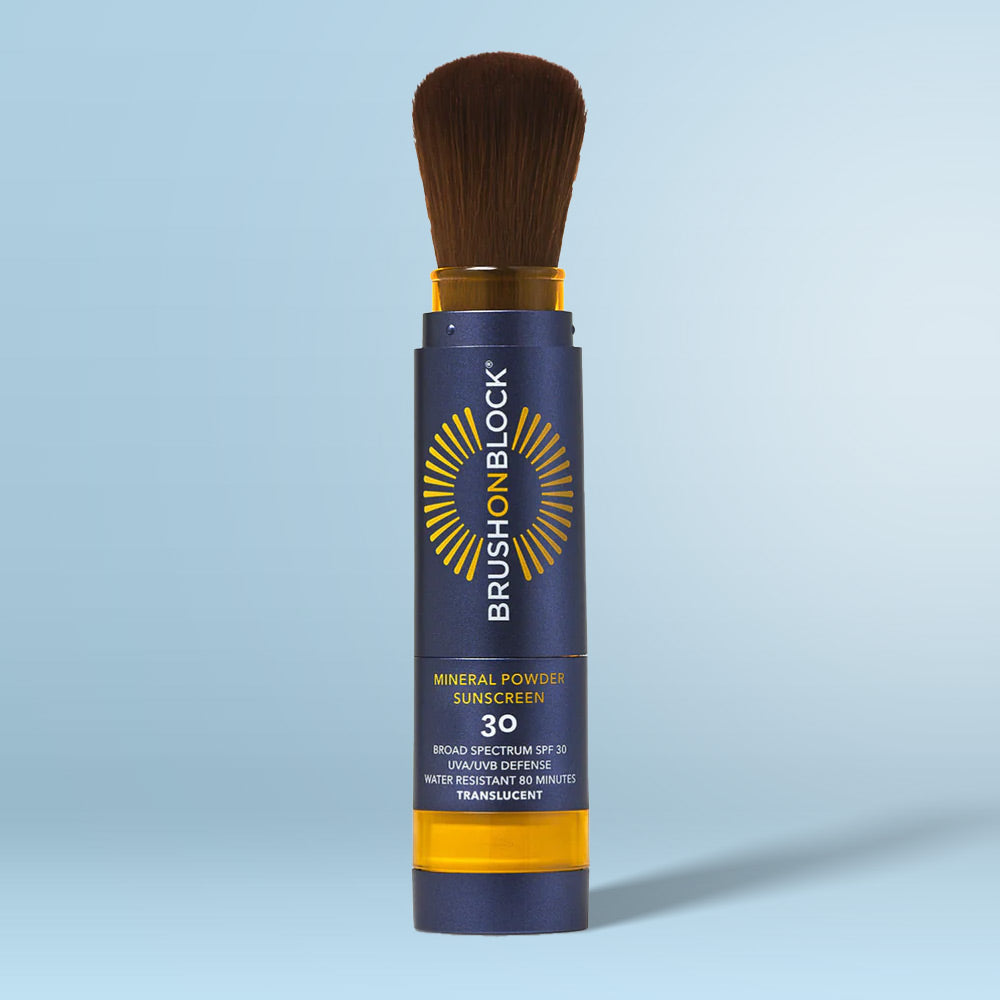
Sunscreen powder works best over makeup when the skin is already dry, the base is mostly set, and you buff on more product than a quick cosmetic sweep. It is useful for a midday top-up because it is less likely to drag foundation than a cream reapplication, but it can still cake if you brush it over fresh oil, tacky concealer, or heavy powder buildup.
Powder format only matters after the timing is already clear. For the core rule on swimming, sweat, towel drying, and the two-hour outdoor window, read When to Reapply Sunscreen After Swimming, Sweating, or Towel Drying first.
- Blot oil or sweat before you touch the brush to the face.
- Use it on dry, set makeup, not over still-sticky base.
- Build coverage with slow circular passes instead of one decorative sweep.
- Treat powder SPF as a touch-up layer, not the only sunscreen you wore all day.
The cleanest expectation is this: powder sunscreen is for restoring a polished sunscreen routine, not replacing a generous morning layer.
Why powder sunscreen cakes over makeup in the first place
Caking usually is not the powder's fault alone. It is the combination of too much surface oil, too much dry powder already sitting on the skin, or makeup that never fully settled before reapplication. When that happens, the brush catches on uneven patches and turns a touch-up into a visible second layer.
The American Academy of Dermatology keeps the big rule simple: sunscreen still needs reapplication every two hours when you are outdoors, and immediately after swimming or sweating. That matters here because people often wait until their makeup is already broken down, then expect powder SPF to fix protection and texture in one pass. By then the face may be too shiny or too textured for a seamless result.
Cleveland Clinic's July 17, 2025 explainer is helpful because it frames powder sunscreen honestly. The format can be worn over makeup, mattify the skin, and work on the go, but it does not provide the same level of protection as traditional sunscreen. That is exactly why the morning base still matters. If the first layer underneath was too light, a powder touch-up cannot fully rescue the day.
The prep step that decides whether it looks smooth
If you want the powder to sit well, do this order every time:
| Step | What to do | Why it matters |
|---|---|---|
| 1 | Press a tissue or blotting paper onto the T-zone | Powder grabs less on fresh oil |
| 2 | Check whether concealer or cream blush still feels tacky | Tacky spots turn buffing into dragging |
| 3 | Dust only where you actually need it first | Starting everywhere at once makes buildup harder to control |
| 4 | Add more passes only after you see how the first layer sits | This keeps the finish lighter |
Blotting is what separates soft reapplication from chalky buildup. If the surface feels damp or slick, wait a few seconds after blotting before using the brush. Powder sunscreen likes calm skin.
How to apply sunscreen powder without caking
Brush On Block's own product instructions make the technique clearer than most beauty chatter does: get powder visible in the bristles, buff onto dry skin using small circular motions, focus on exposed areas like the face, neck, ears, and scalp, and apply generously for about a minute rather than for a rushed second or two. That timing matters because caking often happens when people press harder instead of simply doing more light passes.
ISDIN's over-makeup reapplication guide adds the other half of the answer. The brand suggests letting the sunscreen touch-up settle, then using a mineral powder to reduce shine without altering your makeup. Put those two ideas together and the practical rule becomes obvious: light pressure, repeat passes, and no rushing over wet makeup.
The easiest routine looks like this:
- Tap the brush against the back of your hand first so the first dump of powder does not land all at once on the nose.
- Start at the outer cheek or forehead instead of the center of the face.
- Use small circles rather than hard back-and-forth swipes.
- Revisit the nose and chin last, because those are usually the first places to cake.
- Stop once the surface looks softly matte. Chasing perfect coverage is when the brush starts revealing texture.
When powder sunscreen is the right format
Powder sunscreen is strongest when your makeup is already fairly light and you need a portable top-up before an outdoor walk, commute home, lunch break, or errand run. It is especially forgiving on sheer foundation, skin tint, concealer-only days, and makeup looks that already lean satin or natural rather than heavy and ultra-matte.
It is also practical when shine control is part of the goal. Cleveland Clinic notes that powder SPF can mattify skin, which is exactly why oily or combination skin often gets along with it better than with a midday cream layer. If your makeup tends to slide at the T-zone first, powder can do two jobs at once: tone down the shine and make reapplication more realistic.
When it is not enough on its own
This is the part readers usually need stated plainly. Powder sunscreen is convenient, but it should not be the whole sun routine for long outdoor exposure. AAD still expects the real sunscreen habits underneath: enough product in the first place, reapplication on time, and extra care after sweating. Cleveland Clinic is even more direct that powder should not replace traditional sunscreen.
So if you are outdoors for hours, wearing very full-coverage matte foundation, or dealing with a sweaty day, powder alone may not be enough. In those cases, it makes more sense to keep the morning sunscreen generous, use shade or a hat when possible, and pick the least disruptive touch-up format for your makeup rather than pretending one brush solves everything.
What to do if your powder sunscreen still looks heavy
If it already looks cakey, do not keep layering. Press a clean tissue lightly over the area, then tap the edges with a clean sponge to soften the line where product built up. Usually the better fix is subtraction, not more SPF powder on top of the mess.
For the next round, lower one of the variables:
- less powder already on the face in the morning
- less oil left on the skin before touch-up
- less pressure while buffing
- fewer passes on the nose and under-eye zone
Most people do not need a completely powdered face. They need the places with the most exposure and the most shine to look controlled again.
The practical takeaway
Use sunscreen powder over makeup when you need an easy, portable midday refresh and your base is already dry enough to handle brushing. Blot first, buff in thin circles, and keep the touch-up light. If you remember only one thing, make it this: powder sunscreen looks better when you use more time and less force.
Sources
- American Academy of Dermatology: How to apply sunscreen
- Cleveland Clinic: Does Powder Sunscreen Work?
- ISDIN: The Right Way to Reapply Sunscreen (Yes, Even Over Makeup)
- Brush On Block: Shop SPF 30 Mineral Powder Sunscreen
Read next
- How to Reapply Sunscreen Over Makeup Without Pilling – Start here if you want the bigger format choice between powder, mist, and stick before deciding whether powder is even the right tool.
- How Powder Sunscreen Works Over Makeup – Read this next if you want the broader overview of what powder SPF can and cannot replace in a sunscreen routine.
- How to Use an SPF Stick Over Light Makeup – Use this when your makeup is light enough that a stick might solve the same problem with a slightly richer finish.
