
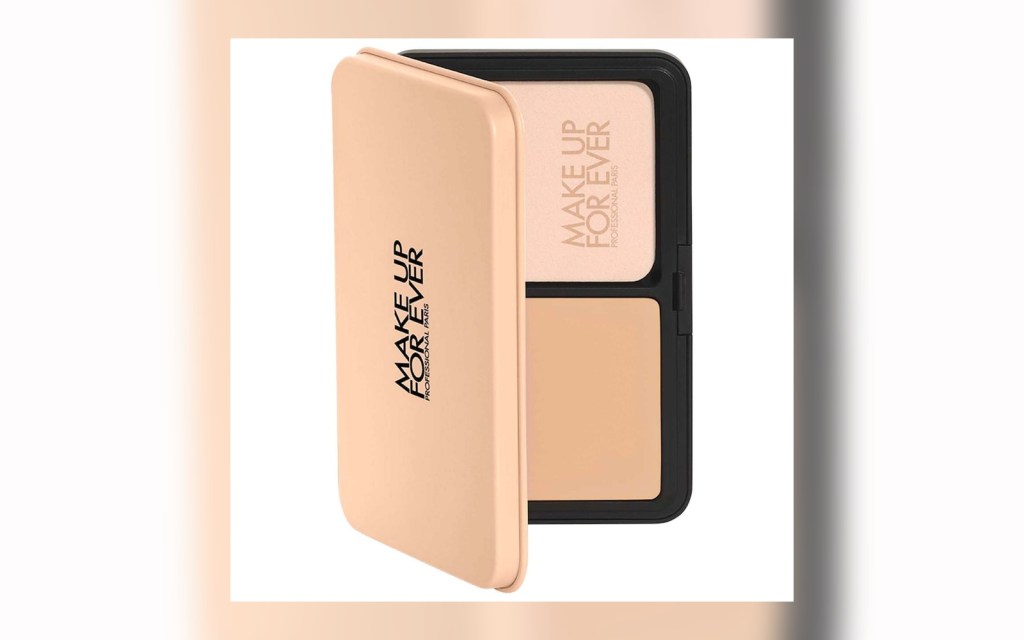
Powder foundation has a reputation problem: people expect it to look dry. It can, especially when it is pressed onto skin that is already tight, flaky, or overloaded with matte primer. But used well, powder foundation can look clean, fast, and polished. The difference is not only the compact. It is the prep underneath and the pressure of the brush or sponge.
MAKE UP FOR EVER positions HD Skin Matte Velvet as a blurring powder foundation with buildable coverage and a matte finish. Sephora lists the same product as a powder foundation designed for complexion coverage, while the American Academy of Dermatology’s dry-skin guidance keeps the foundation issue in context: dry skin needs gentle cleansing and moisturizer before anything else looks good on top.
| Best for | Normal, combination, or oily skin that wants quick coverage without a liquid layer. |
|---|---|
| Prep | Moisturizer first, then sunscreen. Let both settle before powder touches the face. |
| Tool choice | Use a fluffy brush for light coverage, a sponge for targeted coverage, and less pressure than you think. |
| Avoid | Dragging powder over flakes or using heavy powder foundation to hide dehydration. |
Powder foundation needs skin prep, not more powder
If the forehead and cheeks look dusty after one pass, adding more product rarely fixes it. Hydrate first, then apply powder only where the face needs coverage. Around the nose, use a small brush and press rather than sweep. Around dry cheeks, use the lightest layer possible.
The common mistake is treating powder foundation like setting powder. It has more coverage, so it can build up quickly. If you already used concealer, apply powder foundation around it, not on top of every concealed spot. That keeps the face from turning flat.
The clean takeaway
Powder foundation works best when it is used selectively. Prep the skin, build slowly, and keep the driest areas thin. The goal is a blurred finish, not a powdered mask.
 Glowfits
Leave a comment