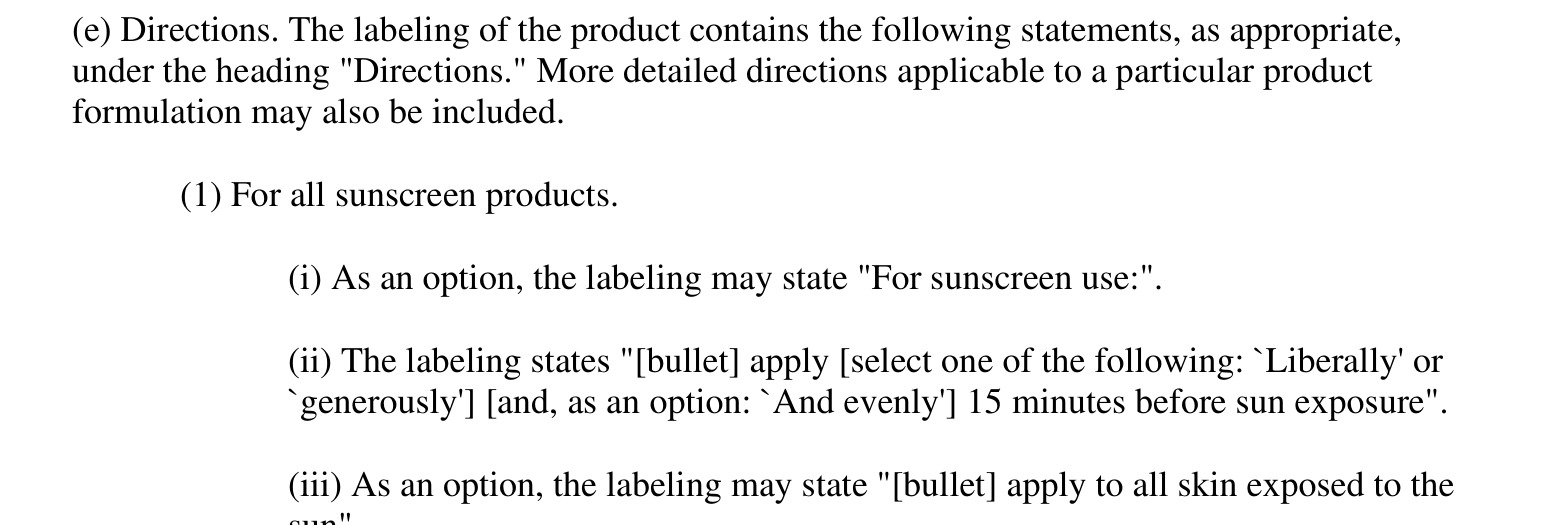
People tend to read sunscreen labels for SPF first and directions second. But one of the most important words on the directions panel is often the least glamorous one: generously. That word exists because real-life sunscreen use is usually thinner and less even than people think.
In other words, the label is quietly warning you that the number on the front of the bottle only makes sense if the amount on the skin is close enough to how the product was tested.
📏 Why the label stays broad
Directions have to cover different body areas, textures, and use cases, so regulators do not turn the public panel into a long numerical lesson for every possible situation. But the meaning underneath is straightforward: thin, reluctant application should not be treated like full SPF performance.
☀️ The real-world mistake most people make
A lot of users apply sunscreen like a primer or finishing cream. That habit feels lighter and more elegant, but it also makes it easier to end up with less coverage than expected. The result is not always obvious right away, which is why the label wording matters so much.
What “generously” really does is pull readers away from the illusion that a barely-there layer and a true sunscreen layer are basically the same.
✅ The better reading rule
If the amount feels closer to a tiny dab than a full protective layer, it is probably not enough. The cleanest rule is to treat the directions panel as part of the protection claim itself. SPF is not just about what the product is. It is also about how it is actually used.
That is the practical reason this one word matters so much. It protects readers from trusting the number on the pack more than the layer on the skin.
Sources
Read next
- Does Cushion Makeup Weaken Your Sunscreen?
Layering a cushion over sunscreen does not cancel protection, but makeup SPF is still not a substitute for a proper broad-spectrum sunscreen layer.
- Cream bronzer puts warmth back before blush starts looking obvious
When the face looks a little flat but blush feels too visible, cream bronzer is often the easier way to bring warmth back in.
- How to Read a Daily Shoulder Bag Before You Buy It
A daily shoulder bag earns its keep when the size, weight, and shape all support how you actually dress, not just how the bag photographs on its own.
 Glowfits
댓글 남기기