Quick answer
A synthetic wig can seem more tangled when wet, so it’s tempting to brush through it before it dries. Start by identifying the exact fiber and following its maker’s sequence: detangle first, wash and rinse at the specified temperature, then condition, comb and air-dry only as directed for that wig. Wet-combing rules differ by brand, so don’t combine steps from separate routines.
Identify your wig and prepare
Check the label, order record or maker’s product page for the exact fiber and construction. Conventional synthetic, heat-friendly synthetic and human-hair pieces can have different care instructions. If you can’t identify the wig, ask the supplier before changing its products or applying heat; appearance alone doesn’t establish how it should be cared for.

The Wig Company recommends products formulated for synthetic fibers. Use the products specified for your wig, and set out a clean towel and suitable wig stand before washing. These instructions cover a removed wig, not removing a bonded piece or cleaning adhesive from a wearer.
Detangle before washing
Jon Renau and Tony of Beverly both start by gently brushing out tangles. The Wig Company recommends working from the bottom in short strokes to separate fibers. Use the tool named by your maker, support the wig, and pause if you meet resistance. Avoid pulling a knot through by force; ask the supplier for help with a stubborn tangle.
Follow Jon Renau’s cool-water routine
For the synthetic pieces covered by its instructions, Jon Renau says to wet the fibers completely under cool running water. Apply a small amount of its Synthetic Shampoo and gently lather with the fibers moving in the same direction. Don’t rub: the brand says rubbing may cause tangling. Rinse thoroughly under cool running water until the water runs clear.
Wrap the wig in a towel and gently pat it dry. Jon Renau then specifies 3–5 pumps of its Conditioning Spray, kept away from the base and left in rather than rinsed out. Its sequence continues with gentle detangling using a wide-tooth comb, followed by air-drying on a plastic or wire wig stand. The combing step is part of this brand’s routine.
Jon Renau’s conventional synthetic instructions prohibit blow-drying and heat styling with curling irons or flat irons. For a heat-friendly piece, check its separate instructions rather than assuming the same heat rules apply.
Follow Tony of Beverly’s basin routine
Tony of Beverly’s published synthetic-care FAQ calls for a basin of cool or lukewarm water deep enough to submerge the wig; it says never to use hot water. Add Phase I Cleanser at 1 ounce per quart of water, and soak for up to 5 minutes, depending on how soiled the piece is.
Gently agitate without rubbing. Rinse under a faucet or in fresh basin water until the solution is removed, using cold water. Let excess water drain at the basin edge or gently pat the wig with a towel on a flat surface. Dry it fully at room temperature on a wig stand.
Tony of Beverly specifically says never to brush or comb a synthetic piece while wet. Keep that instruction with its routine; don’t add Jon Renau’s post-conditioning comb step. Follow the complete sequence for your wig’s maker instead of mixing methods.
Let the wig air-dry with room for its cap
The Wig Company advises against stretching a wet wig over a Styrofoam head or blockhead, which can stretch the cap. It recommends resting the wig loosely on a suitable stand to dry at room temperature and advises against using a blow dryer to speed drying. A display head’s presence in a photo does not make it a drying recommendation.
Wait until the wig is fully dry before judging its style. If tangles, residue or a changed shape remain, tell the maker which products and steps you used and ask what to do next instead of repeating the wash with a stronger cleaner.
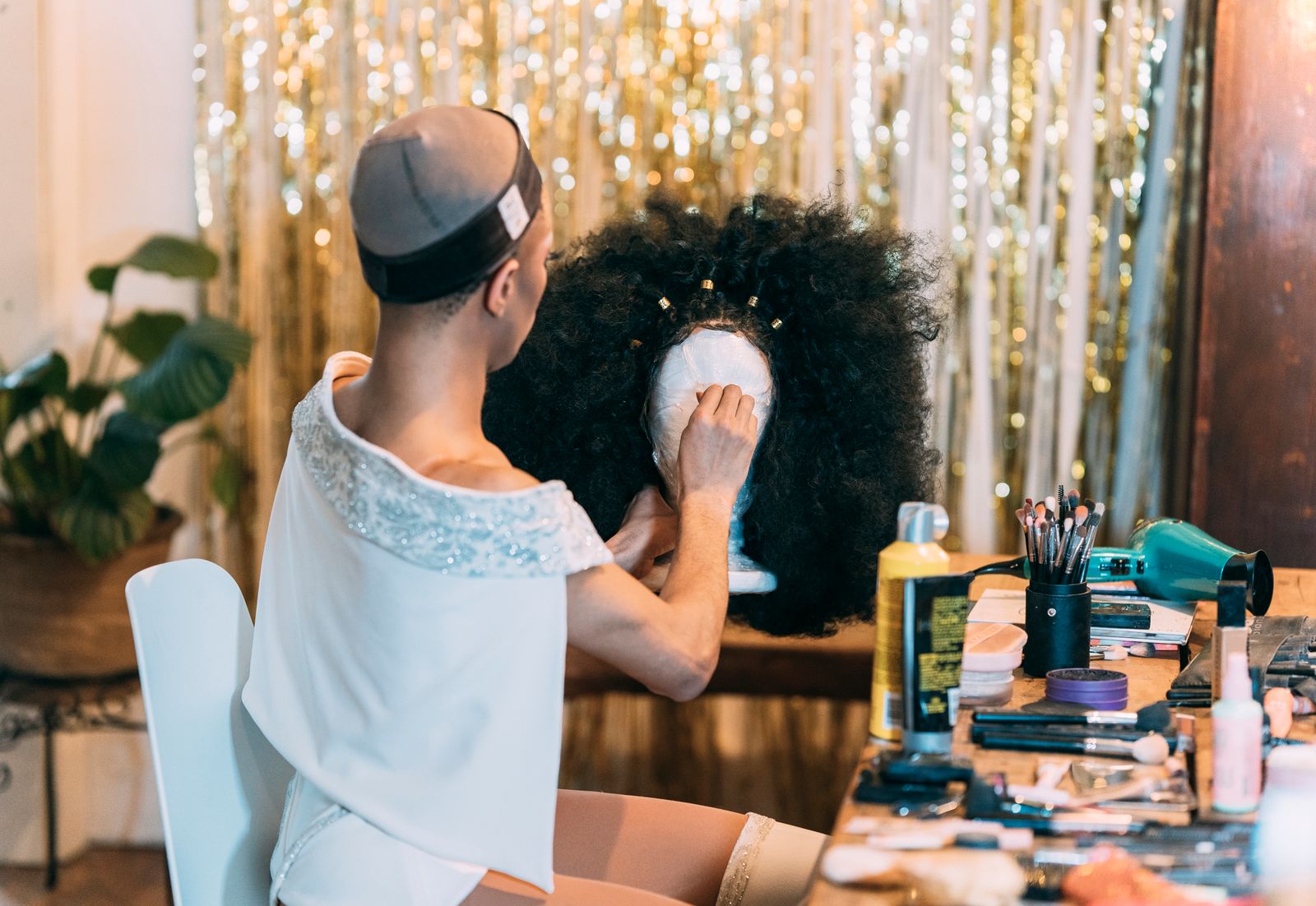
The photos provide general wig-handling and display context; their fibers and brands are unidentified.
Read next
Sources
- Jon Renau: Tess synthetic hair care instructions
- Tony of Beverly: Synthetic fiber washing instructions
- The Wig Company: Synthetic washing, products and drying stand guidance
Image credits
- Featured image: Greta Hoffman / pexels.com (original image page)
- Body image 1: RDNE Stock project / pexels.com (original image page)