Quick answer
Bronzer adds warmth; contour creates the look of shadow. If your base looks even but you want a warmer cast, start with bronzer. If you want more apparent definition, try contour. You can use either, both or neither; choose by the effect you want, not by a rule that every face needs sculpting.
Start with the effect
Think about what you’d like to see in the mirror. If you want warmth across your cheeks and forehead, bronzer is the more direct choice. If you want to suggest a recess beneath your cheekbones or add definition along your jaw, contour is meant to create that shadow effect.

L’Oreal Paris describes bronzer as adding sun-kissed color and contour as simulating shadows. A darker shade or a stick isn’t automatically one or the other: both products come in different textures, and their purpose depends on color and placement.
For a simple everyday routine, try the product that matches your goal first. That makes it easier to decide whether you like the effect before adding another step. It’s a personal styling choice, not a requirement to reshape any feature.
Choose color direction as well as depth
Bronzers often lean warm; contour shades commonly lean cooler to suggest shadow. Treat that as a starting point, not a rule to choose orange bronzer or gray contour. A shade that looks convincing in the pan can look different once it’s blended with your complexion.
L’Oreal’s examples vary by skin tone. They include lighter, neutral bronzers for fair skin; warmth balanced with depth for medium skin; and richer browns for deeper complexions. Its contour examples range from taupe to cooler medium browns and deeper espresso and walnut shades. The point is to find a color that relates to your skin—not to assume one pale taupe will work for everyone.
Check the effect after blending. If a warm shade looks orange where you wanted a subtle shadow, adding more in the same spot won’t change its color direction. Try a different shade or a contour product instead.
Place warmth and shadow differently
Bronzer is generally placed where you want a sun-warmed look, such as the upper cheeks, forehead and temples. Contour goes where you want to suggest a recess, such as below the cheekbones or along the jaw. These are makeup effects; they don’t require an actual tan.
For bronzer, e.l.f.’s guide describes a path from the temple across the cheek area and along the jaw, then blending up and out. Use it as a way to spread color, not as a fixed shape that has to remain sharply visible. For powder bronzer, e.l.f. advises removing excess from the brush before application. For cream bronzer, its instructions favor gentle patting.
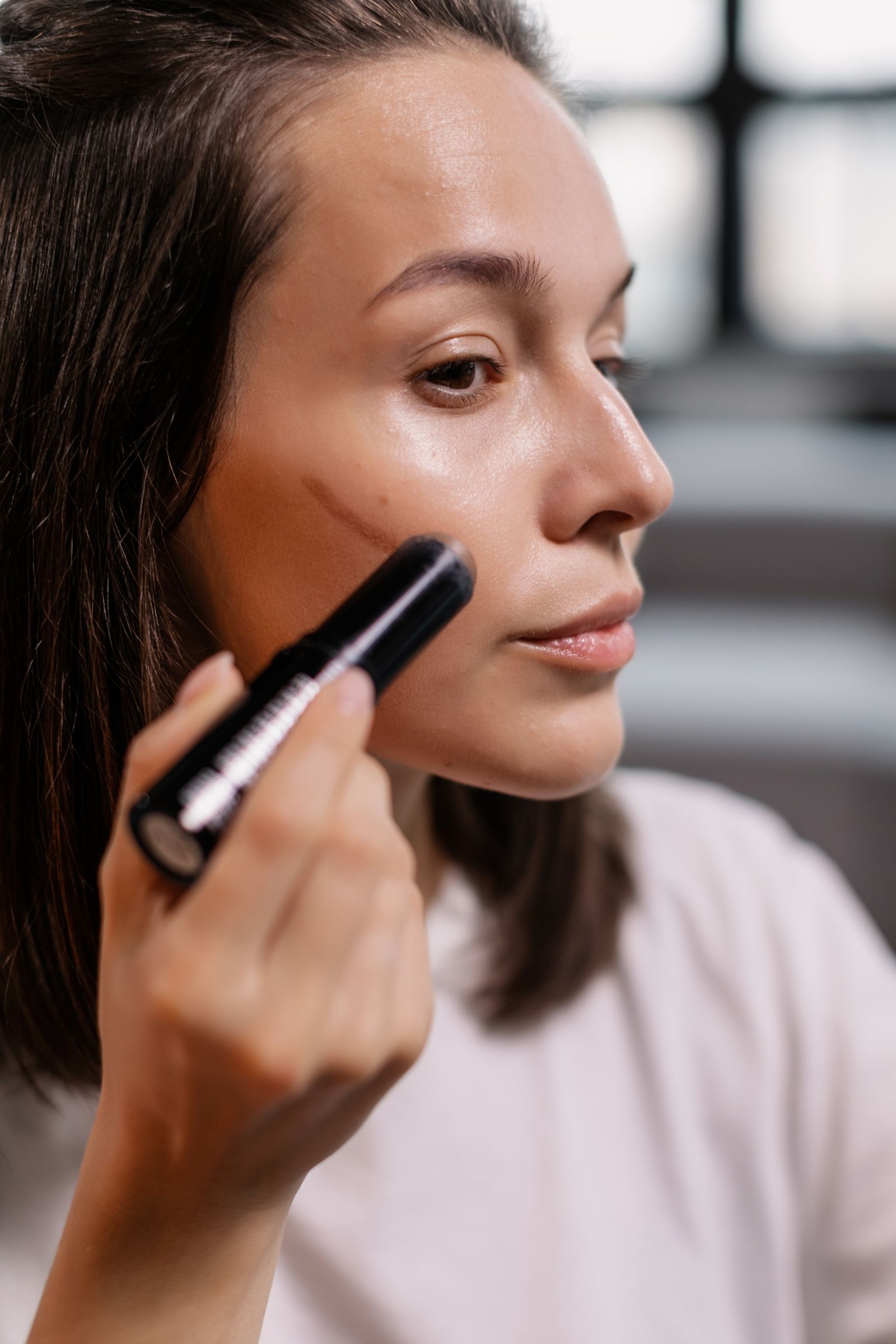
For contour, e.l.f. describes placing product below the cheekbones, along the jaw and at the sides of the nose, then blending up and out. Choose the area that fits the effect you want; you don’t have to mark every area shown in an application diagram. Blend before judging the result. A visible contour line is only placement, not the finished look.
Match the tool to the texture
Cream and powder can call for different approaches. L’Oreal describes blending cream with a dense brush, sponge or fingers, while powder can be built up and diffused with a fluffy brush. Start with the directions for your product and choose a tool that lets you blend comfortably.
If you’re unsure where to begin, use a familiar texture and apply a light amount you can work with. A powder brush loaded with excess can deposit too much color in one spot; for cream, e.l.f.’s gentle-patting guidance offers a different starting motion. No single format is the right choice for everyone.
When to use both
If you want both warmth and definition, L’Oreal’s example routine places contour after foundation and before bronzer, with bronzer higher on the cheek than contour. Blend the shadow effect first, then add warmth where you want it. Keeping the placements distinct can help each product do its own job.
Pause before adding another layer and check whether you already have the effect you wanted. If warmth was the goal, bronzer alone is enough. If you like your complexion’s color and want more apparent definition, contour alone is an option. Blush adds another kind of cheek color; it doesn’t make either brown product necessary.
Read next
Sources
- L'Oreal Paris U.S.: Bronzer versus contour and placement
- e.l.f. U.S.: Bronzer versus contour application guide
Image credits
- Featured image: Alena Darmel / pexels.com (original image page)
- Body image 1: Markus Winkler / pexels.com (original image page)