Quick answer
When your face moisturizer runs out, the body lotion nearby may be an option—but only if its directions say so. Some products are made for both face and body; others have different intended uses. Check the exact product’s label and consider whether its texture and ingredients suit your skin. A body-size bottle alone tells you neither.
Check the directions on the exact bottle
CeraVe’s U.S. guide to face and body moisturizers says suitability depends on the product. It names Daily Moisturizing Lotion and Moisturizing Cream as examples intended for face and body, while making clear that this does not apply to every body product in its range.

Read the full product name and directions. If facial use is unclear, ask the maker about that specific product and market. A similar package or a shared ingredient does not establish that two formulas have the same intended use.
Some body lotions have facial directions
Vanicream’s current U.S. Moisturizing Lotion directions say to apply it as needed to the face, hands, feet and body. The company also confirms facial use in its FAQ. That is the maker’s guidance for this named lotion, not a rule for every large pump bottle.
Vanicream describes Moisturizing Lotion as a lighter version of its Moisturizing Cream and lists Daily Facial Moisturizer separately. Those are distinct products, so check the exact name when reading a review or comparing labels.
The lotion’s listed ingredients include water, petrolatum, propylene glycol and cetearyl alcohol, among others. The list identifies the formula; it does not report ingredient concentrations or predict how everyone’s skin will respond. Check your own package if its version or market differs from the U.S. product page.
Intended use and preferred feel are separate
A lotion can be labeled for facial use and still not feel right in your routine. You may prefer a lighter texture at one time of year and a richer one at another. The American Academy of Dermatology’s winter skin-care guidance notes that face and body needs can differ, and that a light lotion may not be enough in cold, dry weather.
That is a reason to consider your conditions and preferences, not a rule that every body cream is too heavy or every face moisturizer is gentler. Product directions, texture and your own tolerance are separate considerations. Bottle size and shelf placement cannot answer all of them.
Treat ingredient lists as information, not guarantees
Start with ingredients you already know you avoid. A shared ingredient on two labels does not mean the finished products will feel or behave alike, and the manufacturer’s stated use does not guarantee an individual result.
Cleveland Clinic’s guidance on reactions to skin-care products says reactions can happen with both body lotion and face cream, and identifies fragrance as a common concern. A face-specific label does not guarantee that you will avoid a reaction; a comfortable first application cannot rule out a later one.
If a product seems to cause a reaction, stop using the suspected product. Seek professional advice if the rash is severe, worsening or persistent. The timing alone cannot identify the responsible ingredient or diagnose the reaction.
Decide based on the bottle and your routine
If the exact product’s directions allow facial use and you like how it feels, a separate face-only label is not necessary just for appearances. If the lotion feels uncomfortable, the directions are unclear, or the finish does not suit you, another moisturizer may be a better fit.
When in doubt, give the maker the full product name and the market listed on your package. Keep older reviews separate from the bottle you have in hand. The practical question is whether this particular formula is intended for your face and works for you.
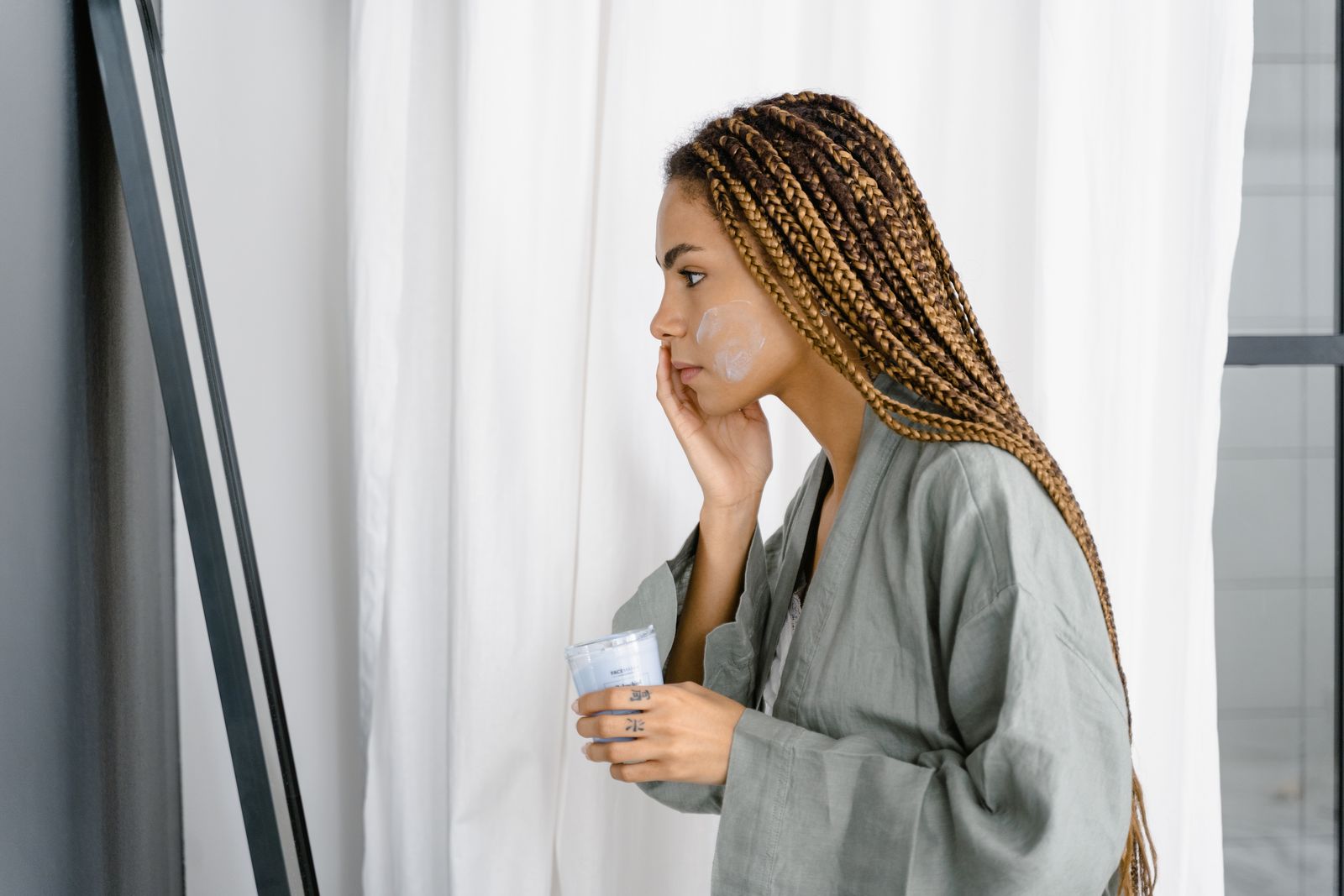
The accompanying photos show facial cream application and a person holding an unidentified dropper bottle. They do not show either named lotion being tested or establish anyone’s tolerance. Use the product’s own directions to make the use-site decision.
Read next
- How to Test a New Skincare Product Before Using It on Your Face
- Fragrance-Free vs Unscented Skincare: What Does the Label Mean?
Sources
- CeraVe U.S.: Body lotion and facial use
- Vanicream U.S.: Moisturizing Lotion directions and ingredients
- AAD: Winter skin survival kit
- Cleveland Clinic: Reactions to skin-care products
Image credits
- Featured image: Tima Miroshnichenko / pexels.com (original image page)
- Body image 1: Anna Shvets / pexels.com (original image page)