Quick answer
A nail snagging on fabric usually needs a smoother edge, not repeated filing until every finger matches. Choose a file intended for natural nails, use light pressure along the free edge, and pause often to check the shape. The American Academy of Dermatology recommends filing in one direction to smooth rough edges. Shaping the tip is different from sanding the nail surface.
The free edge is the unattached distal tip of the nail; it does not have to extend past your fingertip. This advice is for ordinary edge shaping, not removing gel, acrylic, or another artificial coating. If a nail hurts, looks unusually thin, or has a persistent split, stop rather than trying to file the issue away.

Choose a file made for natural nails
Check the tool’s intended use instead of assuming every file in a manicure kit is suitable for natural nails. A file intended for an artificial enhancement is not automatically right for the natural nail underneath.
As one example, OPI describes its Edge White 240 File as a fine, 240-grit file designed for natural nails and gentle length reduction. That is a specification for this product, not a requirement to buy it or a guarantee of a particular result. It also does not mean every file marked 240 feels identical.
Tweezerman’s Glass Nail File is another tool the maker says is intended to shape and smooth natural nail edges. Glass is a material choice, not a reason to press harder. Follow the directions for your specific file, and don’t assume an unmarked tool has a particular grit.
Decide whether to shorten or smooth
First check whether you need to reduce length or just smooth a snag. The AAD’s nail-trimming guide recommends trimming fingernails almost straight across, then slightly rounding the corners with a file or emery board. One rough corner doesn’t mean you need to make every nail the same length right away.
If you’re removing substantial length, use appropriate nail clippers or scissors before refining the edge. Then file gradually, stopping to check the outline rather than trying to reach your target shape in one uninterrupted session.
File the edge with a light touch
Tweezerman’s directions for its glass file say to start at one side and move in one direction toward the center, then repeat from the other side. The AAD also recommends filing in one direction to smooth rough edges. Use the instructions for your file as your guide, and keep the pressure light.
Pause to look at the tip from more than one angle. There’s no set number of strokes: stop when the edge feels smooth enough for your needs. If you’re making the nail shorter or narrower than intended, put the file down and reassess instead of repeatedly trying to correct the outline.
Keep surface filing separate
Filing the free edge shapes the unattached tip. Rubbing an abrasive over the nail plate to remove shine or ridges is surface filing, a different task that removes nail material.
In NailKnowledge’s explanation of filing direction, nail scientist Doug Schoon discusses surface abrasion and emphasizes a light touch. He questions rigid claims about filing direction for the nail surface; that discussion does not show that aggressive abrasion is harmless. Different advice about direction is no reason to increase pressure.
For a home tidy-up, keep the file at the edge. Changing the nail surface or removing an enhancement calls for instructions specific to that procedure.
Finish when the edge is smooth
The AAD’s healthy-nail advice recommends keeping nails shaped and free of snags, keeping them clean and dry, and protecting them during wet chores. It also recommends moisturizing after handwashing. Filing is one part of routine nail care, not a fix for every nail concern.
Follow the maker’s care instructions for your tool. Tweezerman says a broken glass file should be disposed of carefully; don’t assume every file can be soaked or disinfected in the same way.
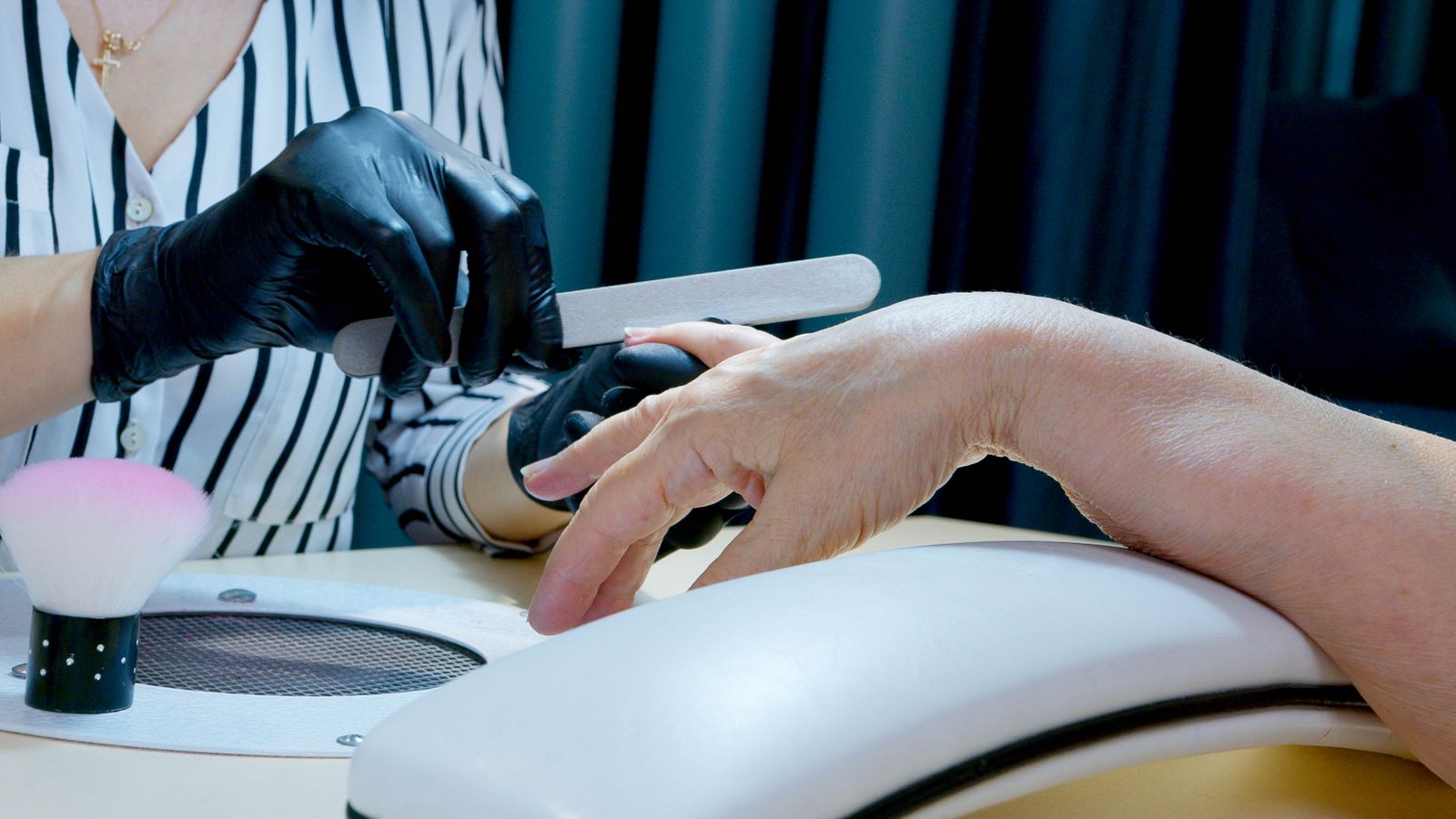
The photos show manual filing, but they don’t identify a brand or grit, establish filing direction, or prove a result. For painful, swollen, or changing nails, seek professional advice rather than treating the concern as an edge to file.
Read next
- Should You Cut or Push Back Your Cuticles?
- Acetone vs Non-Acetone Nail Polish Remover: How to Choose
Sources
- AAD: How to Trim Your Nails
- OPI: Edge White 240 File
- Tweezerman: Glass Nail File
- NailKnowledge: Does the Direction of Nail Filing Matter?
- AAD: Dermatologists' Tips for Healthy Nails
Image credits
- Featured image: Artem Podrez / pexels.com (original image page)
- Body image 1: Tima Miroshnichenko / pexels.com (original image page)