Quick answer
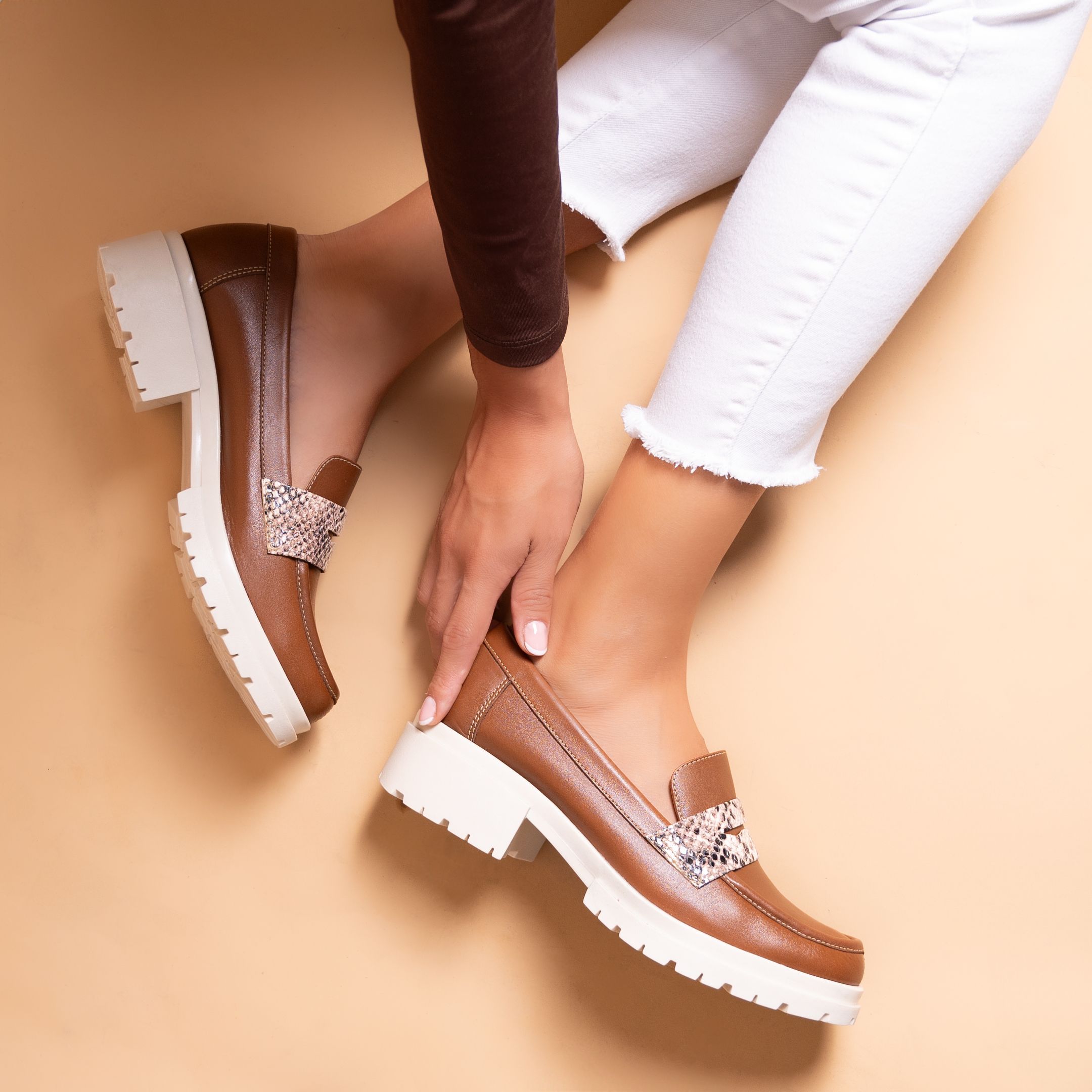
A loafer can look right in the mirror and still lift at the heel as you walk. Check heel movement alongside toe room, width and instep hold; try the socks you plan to wear before sizing down or counting on break-in.
Some movement in a stiff new sole can happen, but that does not mean persistent slipping will resolve. The shoe should stay on your foot as you walk naturally, without pinching your toes or making you grip to keep it in place.

Notice what the heel is doing
Does the shoe move slightly at the back while staying on, or does your heel rise clear of it with each step? Check whether the movement feels the same on both feet. These details help separate a little movement from a loafer that does not feel secure.
Handsole’s loafer fit guidance describes fit as a relationship between the heel, upper and shape of your foot. A stiff sole may resist bending at first and allow some movement, but break-in is a possibility, not a promise that repeated slipping will stop.
Fit the loafers with your usual socks
Try them with the socks or hosiery you expect to wear. A fit with thick socks may feel different with thin hosiery—or with no-show socks—so a try-on only tells you about the combination you tested.
Clarks’ shoe-fitting guide recommends using your usual socks and checking fit later in the day. Bring the planned socks and, if useful, the trousers you expect to wear with the loafers. Walk naturally indoors, turn, and stand again. Notice whether the heel stays put and whether the forefoot remains comfortable.
Check width and instep before going shorter
If the heel slips but your toes already feel crowded, a smaller size may trade one problem for another. Ask whether a different width or loafer shape is available before forcing your foot into a shorter shoe.
Length is only part of the fit. The upper needs to hold across the top of your foot without uncomfortable pressure, while the forefoot needs room. Handsole distinguishes forefoot width from instep volume: a shoe can feel narrow at the front and roomy above the foot at the same time.
Brannock’s fitting instructions recommend measuring both feet and fitting the larger one, while treating measurements as a starting point. Manufacturing and styling vary, so a trial fitting still matters. If one foot slips more, describe that difference to a fitter rather than assuming both feet need the same adjustment.
Make the try-on useful
Keep track of what you tested: sock type, where the shoe feels loose, where it presses, and whether the issue affects one or both feet. Walk normally rather than shuffling to keep the loafer attached. A shoe that stays on only when you change your stride is not an easy fit.
For instance, if one heel slips in thin socks while the other feels secure, that is useful information for a fitter. If both heels feel controlled but your toes are pressed, sizing down is unlikely to address the discomfort. These are observations to guide a fitting, not a measured test or diagnosis.
Treat pads and break-in as uncertain
A different sock or an in-shoe pad may change how much room the loafer feels like it has, but neither is a guaranteed fix. Ask the retailer before attaching adhesive grips or altering a new pair, particularly if you might return it. If one adjustment does not help, reassess the whole fit before adding another.
Check the return conditions for your purchase and country, and keep the shoes clean while trying them indoors. A product photo cannot show how the shoe will fit your foot. Nor can a buckle, pointed toe or chunky sole tell you whether the heel will stay secure.
Style around the pair you can walk in
Once you have a comfortable fit, choose whether to wear visible socks, hosiery or an ankle gap. Cropped trousers put more of the loafer on display; longer hems are worth checking as you walk so they do not catch beneath the heel. These styling choices come after fit.
Choose the pair that lets you walk naturally. If neither nearby size feels right, another loafer shape—or a lace-up or strap style with an adjustable closure—may suit your wardrobe better.
Read next
- Why Loafers and Flats Are Leading Spring Style Again
- How to Wear Wide-Leg Jeans with Ankle Boots Without Dragging Hems
Sources
- Handsole: How Should Loafers Fit?
- Clarks UK: How to Make Sure Your Shoes and Boots Are the Right Fit
- Brannock: Instructions and Fitting Tips
Image credits
- Featured image: pexels.com (original image page)
- Body image 1: pexels.com (original image page)