Quick answer
If your roots look greasy the morning after washing, daily or alternate-day shampooing may fit better than waiting it out. For fine, straight hair and an oily scalp, the American Academy of Dermatology (AAD) says daily shampooing may be appropriate. Let scalp comfort guide the timing, then condition the lengths to help keep them manageable.
Let your scalp set the schedule
There is no single wash calendar for every head of hair. Oiliness, texture, length, age and activity can all shape what feels comfortable. Someone with dry curls may wash less often than someone whose fine roots get oily quickly; neither routine is a rule for everyone.

Cleveland Clinic’s dermatologist guidance allows daily washing when an oily scalp is bothersome. Mayo Clinic emphasizes cleansing the scalp, where oil and dead skin cells can accumulate. Together, that advice points toward a practical question: how does your scalp feel, and how do your roots look?
Your scalp and ends may have different needs. Roots can look flat or oily while the lengths feel dry or rough. That does not automatically mean you need to stretch the time between washes. It may mean washing carefully at the scalp and conditioning where your hair needs it.
Find a rhythm you can live with
If your fine, straight hair gets oily quickly, try daily or alternate-day washing as a starting point. Notice whether the interval leaves your scalp comfortable and your hair manageable. Treat it as a routine to assess, not a prescription or a promise that washing will change how much oil your scalp produces.
Keep the routine fairly steady while you pay attention. Notice when your roots start to feel oily, whether your scalp feels itchy, and how your lengths feel after drying. Changing shampoo, conditioner, styling products and wash timing all at once can make it harder to tell what suits you.
You do not have to put off a wash your scalp seems to need to meet an online challenge. If your roots look coated, also consider whether styling products are building up near them. Product residue and natural oiliness can look similar without meaning the same thing.
Shampoo the scalp; condition the lengths
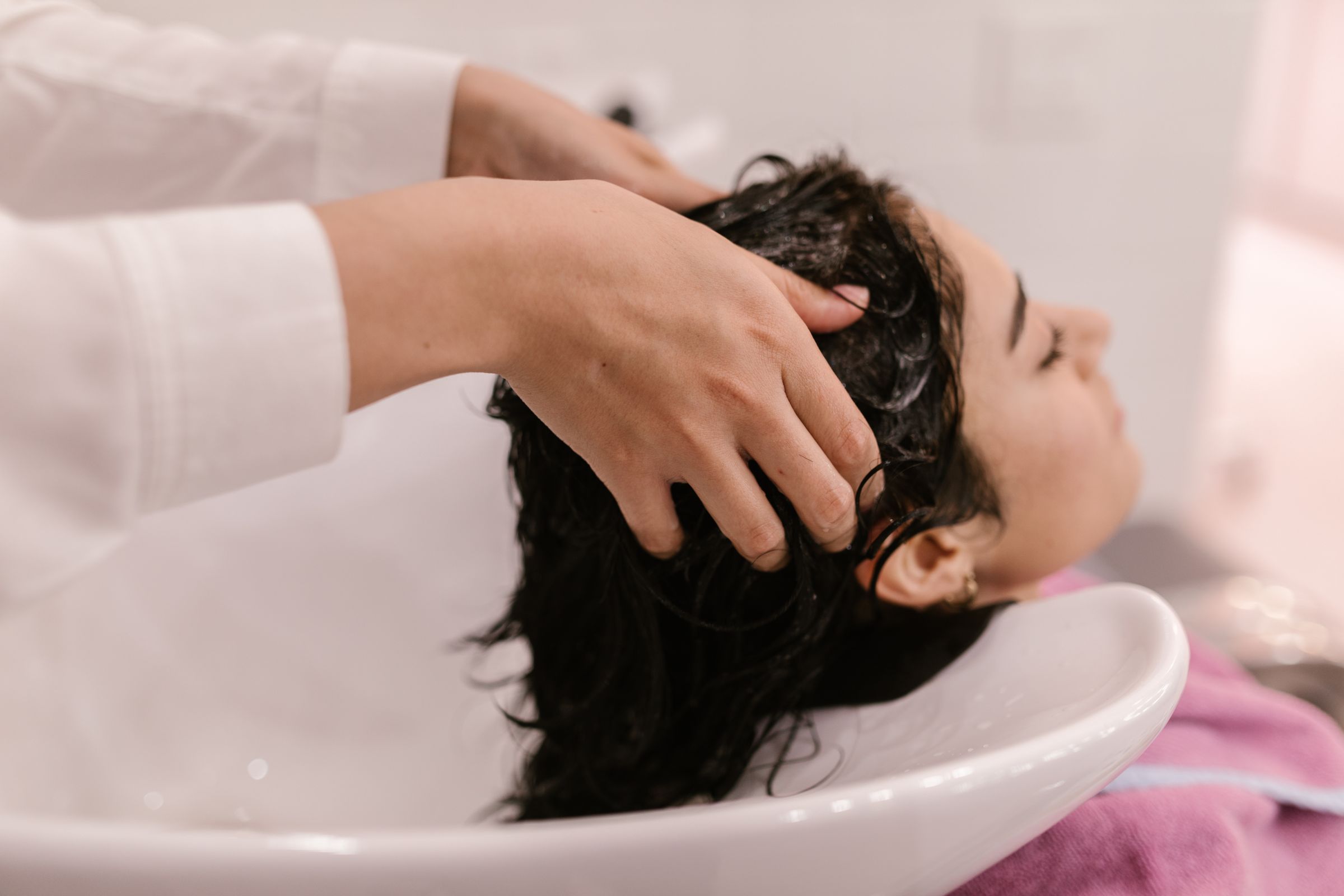
The AAD recommends focusing shampoo on the scalp rather than rubbing it through the entire length. Work gently at the roots and rinse thoroughly. Follow the product’s directions, especially for a medicated shampoo.
More vigorous scrubbing is not a better schedule. Cleanse gently, using your fingertips rather than your nails or an abrasive tool. There is no universal requirement to double-shampoo every time or use a strong clarifying formula daily.
Frequent washing does not mean you need to skip conditioner. The AAD advises applying conditioner mainly to the ends for fine or straight hair; dry or curly hair may need it along more of the length. Follow the formula’s instructions and rinse a rinse-out conditioner as directed.
If your scalp feels comfortable but your ends are getting rough or difficult to comb, look at how and where you condition, as well as whether your shampoo suits your routine. Conditioning dry ends is a separate choice from applying a heavy oil near the roots, which may leave them looking more coated. Handle wet hair gently, too.
Account for workouts and dry shampoo
Exercise alone does not set the same wash schedule for everyone. Cleveland Clinic advises considering your hair type and how oily it actually feels instead of treating every workout as an automatic reason to shampoo. If your scalp feels sweaty, oily or uncomfortable, decide whether it needs cleansing within your usual routine.
Dry shampoo can absorb oil temporarily and refresh the appearance of roots. It does not clean the scalp like shampoo and water, according to Cleveland Clinic. Think of it as a way to refresh hair between washes, not as a substitute for cleansing.
If you keep layering dry shampoo to get through an interval that feels uncomfortable, consider a shorter gap between washes. A manageable routine matters more than seeing how long you can wait.
Get advice for persistent symptoms
Persistent itching, redness, pain or troublesome flaking may call for professional advice, especially if gentle cleansing does not help. Mayo Clinic notes that dandruff can need a different approach, such as an appropriate medicated shampoo. A photograph or article cannot tell you what is causing your symptoms.
For ordinary oily roots, start with a sustainable wash rhythm, cleanse gently at the scalp and condition the lengths that need it. If symptoms persist, ask a dermatologist instead of repeatedly increasing the strength of your shampoo or trying several treatments at once.
Read next
Sources
- AAD: Tips for healthy hair
- Cleveland Clinic: How often should you wash your hair?
- Mayo Clinic: Hair and scalp washing guidance
Image credits
- Featured image: pexels.com (original image page)
- Body image 1: pexels.com (original image page)